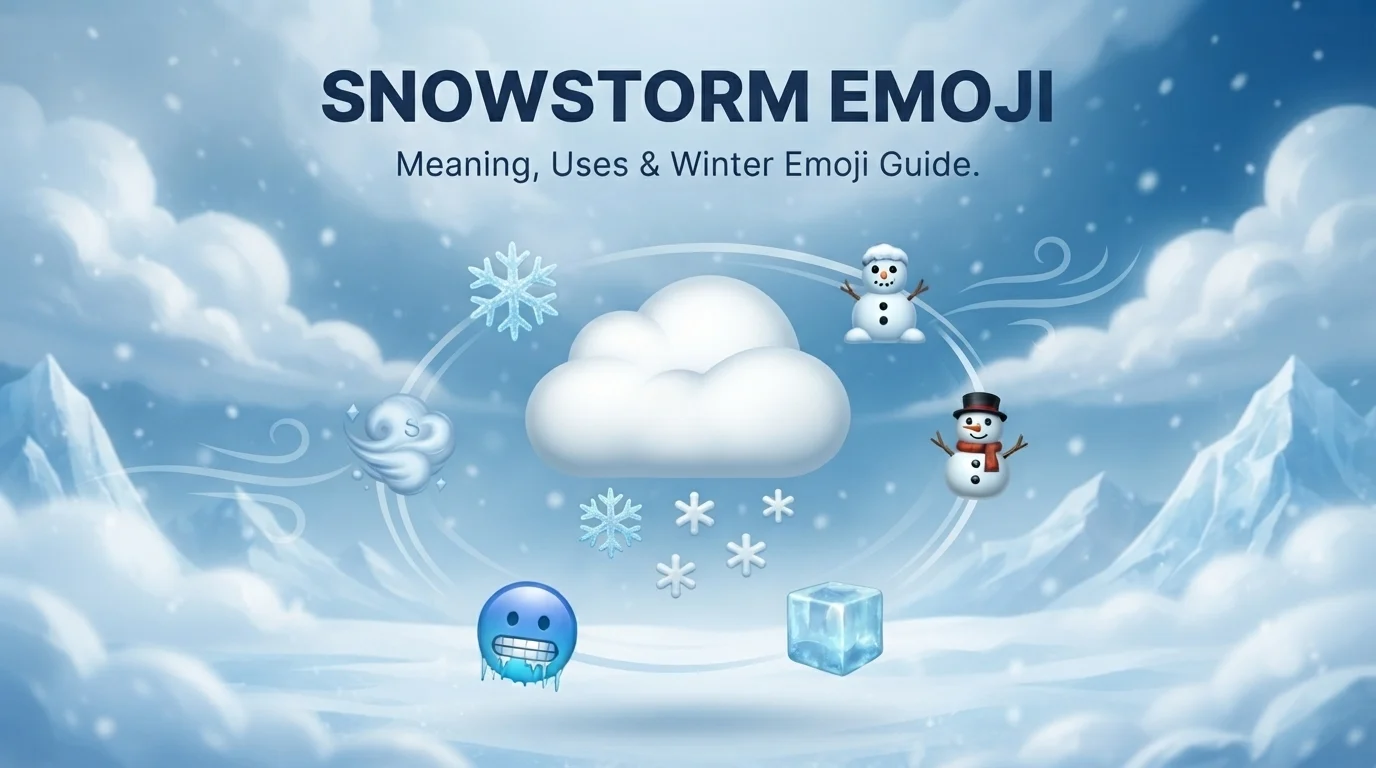
The snowstorm emoji is a popular search term for people looking for an emoji that represents heavy snow, winter storms, blizzards, freezing weather, or snowy conditions. However, one important detail often causes confusion: there is no single standard Unicode emoji officially named “Snowstorm Emoji.”
Instead, people usually use 🌨️ Cloud with Snow, ❄️ Snowflake, ☃️ Snowman, or a combination of weather emojis to represent a snowstorm.
The most common choice is 🌨️, which shows a cloud with falling snow and works well for snowy or stormy weather. Meanwhile, users often combine it with ❄️, 🌬️, or 🥶 to create a stronger blizzard or snowstorm effect.
This guide explains the snowstorm emoji meaning, the best emojis to use for snowy weather, how they differ, how to copy and paste them, and how to use them naturally in messages and social media posts.
Quick Answer: What Is the Snowstorm Emoji?
There is no official Unicode emoji called the “snowstorm emoji.” However, the closest standard emoji is:
🌨️ Cloud with Snow
People commonly use it to represent:
- Snowy weather
- A snowstorm
- Heavy snowfall
- A winter storm
- Cold weather
- A blizzard
- Snow forecasts
You can also combine emojis for a stronger snowstorm effect:
🌨️❄️🌬️
This combination suggests snow, falling flakes, and strong wind.
Other useful winter emojis include:
- 🌨️ Cloud with Snow
- ❄️ Snowflake
- ☃️ Snowman
- ⛄ Snowman Without Snow
- 🌬️ Wind Face
- 🥶 Cold Face
- 🧊 Ice
- 🌫️ Fog
- 🌡️ Thermometer
What Does the Snowstorm Emoji Mean?
The meaning of a snowstorm emoji depends on the context. Most often, it represents snowy or extremely cold weather.
For example:
“We’re expecting snow tonight 🌨️”
Here, the emoji simply describes the weather.
However, the same emoji can also represent a stronger winter event.
For example:
“The roads are closed because of the snowstorm 🌨️❄️”
In this case, the emoji emphasizes the severity of the weather.
People also use snow-related emojis in a non-literal way. For example, they may use them to describe:
- Winter vacations
- Christmas
- A cold mood
- A snowy photo
- Skiing
- Winter fashion
- A cozy day indoors
- A frozen environment
Therefore, the meaning changes depending on the message.
🌨️ Cloud with Snow: The Closest Snowstorm Emoji
The emoji 🌨️ is officially called Cloud with Snow.
It shows a cloud with snow falling underneath. Because of its design, it is the closest standard emoji to what many people mean when they search for a snowstorm emoji.
You can use it when discussing:
- Snowfall
- Snowy weather forecasts
- Winter storms
- Snow-covered areas
- Cold outdoor conditions
Examples:
“It started snowing this morning 🌨️”
“Another winter storm is coming 🌨️”
“The mountains look amazing today 🌨️❄️”
The exact appearance can vary between devices. For example, Apple, Google, Samsung, Microsoft, and other platforms may display the emoji differently.
However, the general meaning remains the same.
Is There an Official Blizzard Emoji?
No single standard Unicode emoji is specifically named “Blizzard.”
This is why people searching for a blizzard emoji often choose 🌨️ Cloud with Snow.
However, a blizzard involves more than falling snow. Strong winds are also an important part of a blizzard.
Therefore, you can create a more accurate visual representation by combining emojis:
🌨️🌬️
This suggests snow and strong wind.
For a more dramatic effect, try:
❄️🌨️🌬️🥶
This combination can communicate:
- Heavy snow
- Winter weather
- Strong wind
- Extreme cold
Of course, you do not need to use every emoji at once. A simple 🌨️ usually communicates the message clearly.
Snowstorm Emoji vs. Snowflake Emoji
The snowstorm emoji and snowflake emoji are related, but they communicate different ideas.
| Emoji | Name | Common Meaning |
|---|---|---|
| 🌨️ | Cloud with Snow | Snowfall or snowy weather |
| ❄️ | Snowflake | Winter, snow, cold |
| 🌬️ | Wind Face | Wind or cold air |
| 🥶 | Cold Face | Feeling extremely cold |
| ☃️ | Snowman | Winter and snow |
| ⛄ | Snowman Without Snow | Winter and fun |
| 🧊 | Ice | Freezing conditions |
| 🌫️ | Fog | Foggy weather |
The main difference is simple.
❄️ represents a single snowflake and often symbolizes winter.
🌨️ represents actual snowfall and therefore works better for weather conditions.
For example:
“I love winter ❄️”
sounds natural because the snowflake symbolizes the season.
However:
“It’s snowing outside 🌨️”
is more specific because it describes falling snow.
❄️ What Does the Snowflake Emoji Mean?
The ❄️ snowflake emoji is one of the most recognizable winter symbols.
It commonly represents:
- Snow
- Winter
- Cold temperatures
- Christmas
- Ice
- Freezing weather
- A winter aesthetic
For example:
“Winter is finally here ❄️”
The snowflake can also have a figurative meaning.
Someone may use it to describe a “cool” personality, a cold response, or a winter-themed aesthetic.
In social media captions, people often use several snowflakes together:
❄️❄️❄️
This creates a decorative winter effect.
However, if you specifically want to describe a snowstorm, 🌨️ usually provides more context.
How to Make a Snowstorm Using Emojis
Because there is no dedicated emoji named “Snowstorm,” you can combine several emojis.
Here are some useful combinations.
Simple Snowstorm
🌨️
Best for:
- Weather messages
- Snow forecasts
- Simple captions
Heavy Snow
🌨️❄️❄️
This gives the impression of increased snowfall.
Blizzard
🌨️🌬️❄️
This works well because it combines snow and wind.
Extreme Cold
🌨️🥶🧊
Use this combination when emphasizing freezing temperatures.
Winter Weather
❄️🌨️☃️
This is a fun combination for general winter content.
Dangerous Winter Conditions
🌨️🌬️🥶⚠️
This combination may suggest severe weather. However, emojis should never replace important safety information during an actual emergency.
Snowstorm Emoji Meaning in Text Messages
In text messages, the snowstorm emoji usually communicates weather information quickly.
For example:
“Drive carefully. The snow is getting worse 🌨️”
The emoji supports the message.
Another example:
“School might close tomorrow because of the snowstorm 🌨️❄️”
Here, the combination makes the topic immediately clear.
You can also use the emoji casually:
“Perfect weather for staying inside 🌨️☕”
This creates a cozy feeling.
The meaning becomes more emotional in messages such as:
“I don’t want to leave my blanket today 🥶🌨️”
Here, the emojis help communicate discomfort and humor.
Snowstorm Emoji Meaning on Social Media
The snowstorm emoji is popular on social media because it quickly creates a winter atmosphere.
People often use it in:
- Instagram captions
- TikTok captions
- Facebook posts
- X posts
- Snapchat messages
- YouTube comments
For example:
“A beautiful snowy morning 🌨️❄️”
Or:
“Winter adventures begin now! ⛷️❄️”
For a dramatic winter photograph, you might write:
“Lost in the storm 🌨️🌬️”
The emoji can also help create a visual theme.
For example:
❄️ Winter Vibes ❄️
or:
🌨️ Snow Day 🌨️
These combinations are simple, easy to understand, and visually appealing.
How to Copy and Paste the Snowstorm Emoji
You can copy the snow-related emojis directly from this page.
Snowstorm Emoji
🌨️
Snowflake Emoji
❄️
Wind Emoji
🌬️
Cold Face Emoji
🥶
Ice Emoji
🧊
Snowman Emoji
☃️
Snowman Without Snow
⛄
After copying an emoji, paste it into:
- Text messages
- Social media captions
- Comments
- Emails
- Notes
- Chat applications
Most modern smartphones and computers also include emojis directly on their keyboards.
How to Find the Snowstorm Emoji on iPhone
On an iPhone, you can usually find weather and winter emojis through the emoji keyboard.
A simple method is:
- Open a text field.
- Open the emoji keyboard.
- Search for terms such as “snow,” “weather,” “cold,” or “winter.”
- Select the emoji you want.
You can also copy:
🌨️
and save it in a note for quick access.
How to Find the Snowstorm Emoji on Android
Android devices also include an emoji keyboard.
The exact design depends on your keyboard and device.
Generally:
- Open a message or text field.
- Tap the emoji icon.
- Search for “snow” or browse weather-related categories.
- Select 🌨️ or another winter emoji.
The appearance may differ between Android devices, but standard Unicode emojis generally remain recognizable.
Snowstorm Emoji on Windows and Mac
You can also use the snowstorm emoji on a computer.
Windows
On many Windows computers:
- Click a text field.
- Press Windows + . or Windows + ;
- Open the emoji panel.
- Search for “snow.”
- Select the desired emoji.
Mac
On a Mac:
- Click where you want to insert an emoji.
- Press Control + Command + Space.
- Open the emoji viewer.
- Search for “snow.”
- Choose the emoji.
These shortcuts make it easier to add weather emojis without copying them from a website.
Why Does the Snowstorm Emoji Look Different on Different Devices?
Emoji designs are not identical across every platform.
The Unicode standard provides the underlying emoji character. However, companies create their own visual designs.
As a result, 🌨️ may look slightly different on:
- iPhone
- Android
- Windows
- Mac
- Samsung devices
- Social media platforms
One platform may show more visible snowflakes, while another may use a different cloud design.
However, the intended meaning generally remains recognizable.
This difference is important when creating visual content. If you need a specific appearance, you should check how the emoji looks on your target platform.
Common Snowstorm Emoji Mistakes
Mistake 1: Thinking 🌨️ Is Officially Called “Snowstorm”
The emoji is commonly used as a snowstorm emoji, but its standard name is Cloud with Snow.
People use the phrase “snowstorm emoji” because it is an easy way to describe what they are searching for.
Mistake 2: Using ❄️ for Every Weather Situation
The snowflake emoji represents snow and winter, but it does not necessarily indicate active snowfall.
If you want to say:
“It’s snowing right now,”
then 🌨️ may communicate the message more clearly.
Mistake 3: Using Too Many Emojis
A caption like:
🌨️❄️❄️❄️🌬️🥶🧊☃️⛄❄️❄️
can become difficult to read.
Instead, choose two or three emojis that match your message.
For example:
Heavy snow tonight 🌨️❄️🥶
This looks cleaner.
Mistake 4: Using Emojis Instead of Safety Information
During a serious snowstorm, emojis can support a message but should not replace important details.
Instead of writing:
“🌨️⚠️”
write something more useful:
“Heavy snow is expected tonight. Avoid unnecessary travel and check local weather alerts. 🌨️”
The emoji adds visual context, while the text provides actual information.
Mistake 5: Confusing Snow with Ice
A snowstorm and icy conditions are not exactly the same.
Use:
- 🌨️ for snowfall
- ❄️ for snow or winter
- 🧊 for ice
- 🥶 for feeling cold
Choosing the correct emoji makes your message clearer.
Best Snowstorm Emoji Combinations
Here are some combinations you can copy and use.
Weather
🌨️❄️
Blizzard
🌨️🌬️
Freezing Weather
🥶❄️🧊
Snow Day
🌨️🏠☕
Winter Vacation
❄️🏔️⛷️
Cozy Winter
🌨️☕🧣
Christmas Winter
🎄❄️☃️
Snowy Adventure
🌨️🏔️🥾
Cold Morning
🥶🌨️☕
These combinations work because each emoji adds something different to the message.
When Should You Use the Snowstorm Emoji?
Use the snowstorm emoji when you want to communicate snow or winter weather quickly.
It works particularly well for:
Weather Updates
“Snow expected this afternoon 🌨️”
Travel Messages
“Our flight may be delayed because of the weather 🌨️”
Winter Photos
“Snow-covered streets this morning ❄️🌨️”
Snow Days
“No school today! 🌨️🎉”
Winter Captions
“Living for these winter views ❄️🏔️”
Cold Weather Complaints
“Why is it so cold? 🥶❄️”
The emoji is flexible. Therefore, you can use it for serious weather discussions, casual messages, and creative social media posts.
Snowstorm Emoji and Winter Aesthetics
The snowstorm emoji has become part of the popular winter aesthetic used online.
People combine snow emojis with:
- White backgrounds
- Blue colors
- Mountains
- Coffee
- Sweaters
- Scarves
- Christmas decorations
- Winter photography
For example:
❄️ Cozy Winter Days ☕🧣
This type of caption creates an immediate seasonal mood.
Similarly:
🌨️ Chasing Snowy Adventures 🏔️
works well for travel content.
The emoji itself is simple, but it can help establish the theme of a post quickly.
Helpful Tips for Using Snow Emojis Naturally
First, choose the emoji that best matches your message.
Use 🌨️ when discussing active snowfall.
Use ❄️ for general winter themes.
🌬️ when wind is important.
Use 🥶 when describing extreme cold.
Second, do not overload your message. One or two relevant emojis usually work better than a long row.
Third, remember that emojis support words. If you are sharing important weather information, always provide clear details.
Finally, consider your audience. A casual Instagram caption can use several decorative emojis, while a professional weather update should remain clear and direct.
Frequently Asked Questions About the Snowstorm Emoji
1. Is there a snowstorm emoji?
There is no standard Unicode emoji officially named “Snowstorm.” However, 🌨️ Cloud with Snow is the closest and most commonly used emoji for a snowstorm.
2. What does 🌨️ mean?
The 🌨️ emoji represents a cloud with falling snow. People commonly use it for snowy weather, snowfall, winter storms, and snow forecasts.
3. What is the best emoji for a blizzard?
The closest single emoji is 🌨️. However, you can combine 🌨️🌬️❄️ to better represent a blizzard with snow and strong winds.
4. What is the difference between 🌨️ and ❄️?
🌨️ represents a cloud with falling snow and is useful for active snowy weather. ❄️ represents a snowflake and usually symbolizes snow, winter, or cold.
5. Can I copy and paste the snowstorm emoji?
Yes. You can copy 🌨️ and paste it into messages, captions, comments, emails, and many other applications.
6. Why does the snowstorm emoji look different on my phone?
Different companies create their own emoji designs. Therefore, 🌨️ may look slightly different on Apple, Google, Samsung, Windows, and other platforms.
7. What emojis can I combine with the snowstorm emoji?
Popular combinations include 🌨️❄️, 🌨️🌬️, 🌨️🥶, and 🌨️☕. Choose combinations based on whether you want to show snow, wind, cold, or a cozy winter mood.
8. Can I use the snowstorm emoji for a winter caption?
Yes. The emoji works well for winter captions, snowy photographs, travel posts, snow days, and cold-weather messages. Combining it with ❄️, ☕, 🧣, or 🏔️ can create a stronger winter theme.
Conclusion
The snowstorm emoji is an easy and expressive way to represent snowy weather, winter storms, freezing temperatures, and beautiful winter scenes. Although Unicode does not have one emoji officially named “Snowstorm,” 🌨️ Cloud with Snow is the closest and most useful option. Meanwhile, emojis such as ❄️, 🌬️, 🥶, and 🧊 can add extra meaning when you want to describe a blizzard, strong wind, or extreme cold.
The best approach is to choose emojis that match your message. Use 🌨️ for falling snow, ❄️ for winter, and 🌨️🌬️ when you want to suggest a stronger snowstorm. Whether you are sharing a weather update, posting a snowy photo, creating a winter caption, or simply telling a friend that it is freezing outside, these emojis make your message clearer, more expressive, and more engaging.

I am Willie Michael, an author passionate about language and clear communication. I enjoy exploring synonyms and helping readers discover better, more precise words for everyday writing.