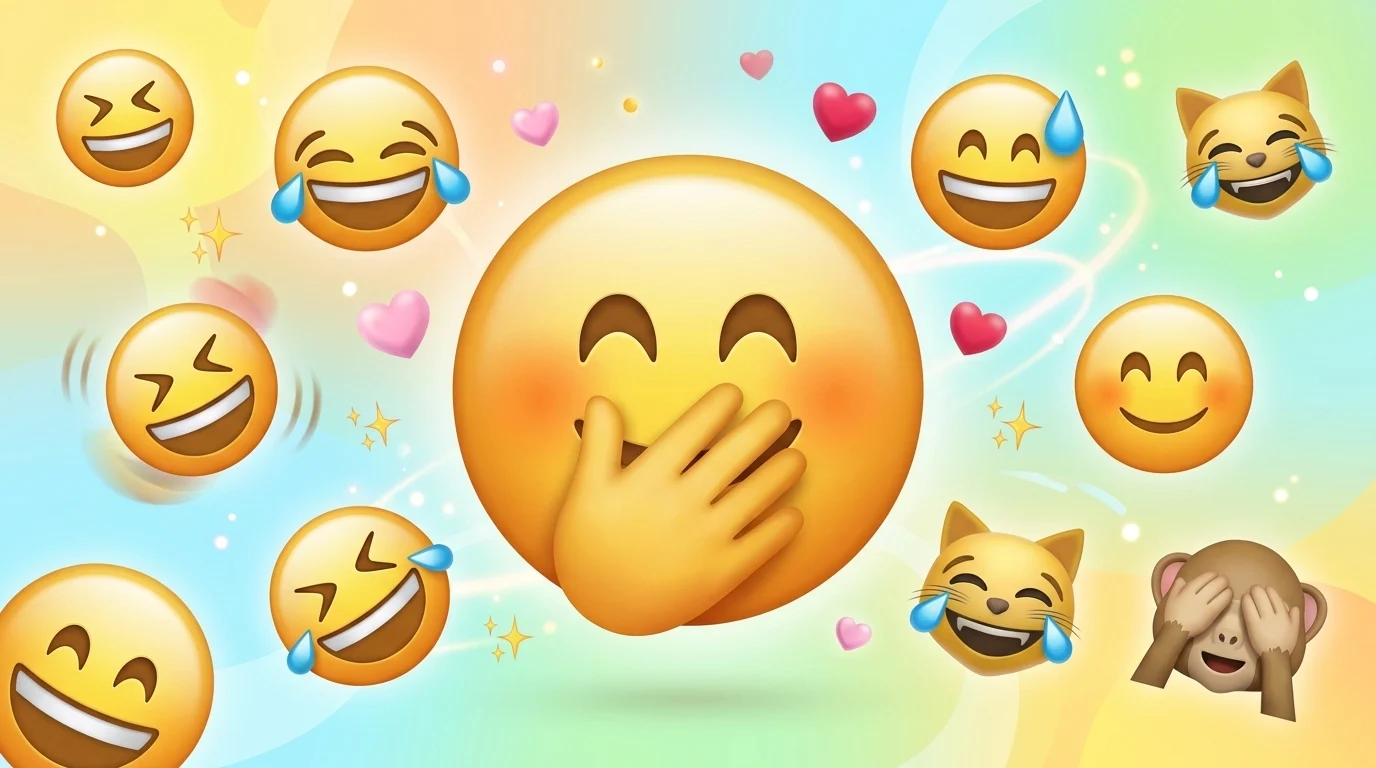
The giggling emoji is a fun way to show that something makes you laugh, smile, or feel playfully amused. Whether you are chatting with friends, reacting to a funny message, commenting on social media, or sharing a silly moment, the right emoji can express your feelings without requiring a long explanation.
Several emojis can represent giggling, including 😂, 🤭, 😆, 😅, and 🤣. However, each one communicates a slightly different emotion. For example, 😂 often expresses laughter, 🤭 suggests a quiet giggle or a playful secret, and 😆 shows a big, cheerful laugh.
In this guide, you will discover what the giggling emoji means, which emojis you can copy and paste, how to use them in different conversations, and how to choose the right symbol for every situation.
Quick Answer: What Is the Giggling Emoji?
The giggling emoji usually refers to an emoji that expresses lighthearted laughter, amusement, or a quiet chuckle. There is no single emoji officially named “Giggling Face,” so people use several existing emojis to communicate this feeling.
Here are some popular options you can copy and paste:
- 🤭 — Face with Hand Over Mouth: a shy giggle, suppressed laugh, or playful reaction.
- 😂 — Face with Tears of Joy: laughing hard at something funny.
- 😆 — Grinning Squinting Face: a big, cheerful laugh.
- 🤣 — Rolling on the Floor Laughing: uncontrollable laughter.
- 😅 — Grinning Face with Sweat: nervous laughter or an awkward chuckle.
- 😊 — Smiling Face with Smiling Eyes: a warm, gentle smile.
- 😹 — Cat with Tears of Joy: an exaggerated, playful laughing reaction.
Best choice for a quiet giggle: 🤭
Best choice for everyday laughter: 😂
Choice for a huge laugh: 🤣
What Does the Giggling Emoji Mean?
The meaning depends on the emoji you choose and the context of your conversation. Generally, giggling emojis help communicate amusement, happiness, embarrassment, or playful teasing.
1. Quiet or Shy Laughter
The 🤭 emoji is a popular choice when you want to show that you are giggling quietly. Its hand-over-mouth expression can suggest that you are trying not to laugh or reacting to something a little embarrassing.
Example:
“Did you really say that in front of everyone? 🤭”
This response can sound playful rather than harsh, especially when you are talking to a close friend.
2. Laughing at Something Funny
The 😂 emoji is useful when a joke, video, meme, or message makes you laugh.
Example:
“That video was so funny 😂”
It is widely recognized as a laughter reaction and works well in casual conversations.
3. A Big, Cheerful Laugh
The 😆 emoji communicates a broad, energetic smile with tightly closed eyes. It can make your message feel enthusiastic and cheerful.
Example:
“We finally finished the project! 😆”
Depending on the conversation, it can express excitement as well as laughter.
4. Uncontrollable Laughter
The 🤣 emoji is suitable when something seems extremely funny. Its expression suggests that the person is laughing so hard that they are rolling on the floor.
Example:
“Your impression of the teacher had me laughing for five minutes 🤣”
Use it when you want to emphasize a strong reaction.
5. Nervous or Embarrassed Giggling
The 😅 emoji combines a smile with a bead of sweat. People often use it when they laugh through an awkward moment or feel relieved after a stressful situation.
Example:
“I almost sent that message to the wrong group 😅”
Unlike 🤭, which can suggest a secretive or shy giggle, 😅 often communicates nervousness or relief.
Giggling Emoji Copy and Paste
If you want to use a giggling emoji in a message, bio, caption, comment, or status, simply copy the symbol you need.
| Emoji | Common meaning | When to use it |
|---|---|---|
| 🤭 | Quiet giggle or playful surprise | Funny secrets and shy reactions |
| 😂 | Laughter and amusement | Jokes, memes, and funny stories |
| 😆 | Big, cheerful laugh | Happy and energetic reactions |
| 🤣 | Extremely strong laughter | Hilarious videos and jokes |
| 😅 | Awkward or nervous laugh | Mistakes and embarrassing moments |
| 😊 | Warm smile | Friendly, gentle happiness |
| 😹 | Playful cat laughter | Cute or exaggerated reactions |
| 😁 | Excited grin | Positive and cheerful conversations |
| 😜 | Playful teasing | Jokes and lighthearted banter |
| 🙈 | Embarrassment or playful shyness | Awkward but funny moments |
You can select an emoji from the table and copy it directly from the text. If a symbol looks different on your device, your phone, computer, browser, or messaging app may use a different emoji design.
🤭 vs. 😂 vs. 😆 vs. 🤣: What Is the Difference?
Although these emojis can all express laughter, they are not interchangeable in every situation.
🤭 Face with Hand Over Mouth
This emoji works well for a quiet giggle, a surprised reaction, or a playful moment when you are trying not to laugh. It can also suggest that you know something amusing.
Example: “I probably shouldn’t tell you what happened next 🤭”
😂 Face with Tears of Joy
This emoji is useful for everyday laughter. It can respond to a joke, a funny story, or a humorous social media post.
Example: “You always have the funniest stories 😂”
😆 Grinning Squinting Face
This emoji expresses a strong grin and cheerful laughter. It often feels energetic and enthusiastic.
Example: “That was such a good time 😆”
🤣 Rolling on the Floor Laughing
This emoji adds extra emphasis. Use it when a situation seems much funnier than an ordinary chuckle.
Example: “I can’t believe that actually happened 🤣”
Quick Comparison Table
| Feature | 🤭 | 😂 | 😆 | 🤣 |
|---|---|---|---|---|
| Main feeling | Quiet giggle | General laughter | Cheerful laughter | Intense laughter |
| Tone | Shy or playful | Casual and funny | Energetic | Exaggerated |
| Best use | Secrets and awkward jokes | Everyday humor | Exciting funny moments | Extremely funny content |
| Possible extra meaning | Surprise | Amusement | Happiness | Over-the-top reaction |
Remember that people interpret emojis differently. Your relationship with the recipient and the surrounding message can change how an emoji feels.
How to Use the Giggling Emoji in Text Messages
Giggling emojis can make ordinary messages feel warmer, more expressive, and more natural. However, the best choice depends on what you want to communicate.
1. In Conversations With Friends
Friends often use giggling emojis to react to jokes, funny mistakes, and playful teasing.
Examples:
- “You really forgot your own password? 😂”
- “Stop, I’m trying not to laugh 🤭”
- “That story gets funnier every time 😆”
- “We were both so confused 🤣”
These reactions help show that you are enjoying the conversation.
2. When Teasing Someone Playfully
A giggling emoji can soften teasing and make your intention clearer.
Example:
“You took twenty minutes to choose a movie? 🤭”
The emoji suggests that the message is playful. Nevertheless, avoid relying on emojis alone when a joke could hurt someone’s feelings.
3. When You Feel Embarrassed
Sometimes you laugh because a situation feels awkward rather than genuinely hilarious. In these cases, 😅 or 🤭 may fit better than 🤣.
Examples:
- “I waved back at someone who wasn’t waving at me 😅”
- “I accidentally called my teacher ‘Mom’ 🤭”
The first emphasizes awkwardness, while the second can suggest a shy or amused reaction.
4. When Sharing Good News
A giggling emoji can add excitement to happy news, particularly when you are sharing a funny achievement or celebrating a lighthearted moment.
Example:
“I passed the test, and I barely slept last night 😆”
For more serious announcements, consider using a simple smile or celebration emoji instead.
Giggling Emoji Combinations
Emoji combinations let you express a more specific emotion. You can pair a giggling face with hearts, other expressions, or symbols that add context.
Here are some combinations you can copy and paste.
| Emoji combinationPossible meaning | |
|---|---|
| 🤭😂 | Trying not to laugh but finding something hilarious |
| 😂🤣 | Laughing extremely hard |
| 🤭🙈 | Shy, embarrassed, or playful giggling |
| 😆✨ | Happy, excited laughter |
| 😅😂 | Laughing about an awkward situation |
| 🤭💕 | A cute or affectionate giggle |
| 😜😂 | Playful teasing and laughter |
| 😊🤭 | A warm smile with a shy giggle |
| 😂💀 | Something is so funny that it feels overwhelming |
| 🤣😭 | Laughing so hard that you are crying |
These combinations do not have fixed meanings. For instance, 😂💀 often represents exaggerated internet humor rather than anything related to death.
Use combinations naturally instead of adding too many emojis to every message. One or two symbols are often enough to make your meaning clear.
How to Use Giggling Emojis on Social Media
Giggling emojis fit naturally into social media captions, comments, reactions, and conversations. Still, different situations call for different expressions.
Instagram Captions and Comments
Use 😂 or 🤣 when sharing a funny memory, humorous reel, or relatable experience.
Examples:
- “This is exactly how my Mondays go 😂”
- “The ending caught me off guard 🤣”
- “Trying to keep a straight face in this situation 🤭”
For a cute photo or playful caption, 🤭 can add a softer tone.
TikTok Videos
Giggling emojis can communicate your reaction to a funny video, unexpected twist, or relatable trend.
Examples:
- “The last part got me 😂”
- “Why is this so relatable 😭🤣”
- “I was not ready for that ending 🤭”
Because social media slang changes over time, the exact meaning may depend on the trend, creator, or community.
WhatsApp Messages and Statuses
On WhatsApp, you can use giggling emojis in private chats, group conversations, and status captions.
Examples:
- “You won’t believe what happened today 🤭”
- “Family group chats are always like this 😂”
- “That was an unforgettable day 😆”
If you are responding to someone who shares something personal or upsetting, choose a supportive response rather than automatically reacting with laughter.
Gaming and Online Communities
Gaming chats often use 😂, 🤣, and 😆 to react to funny mistakes, surprising moments, or unexpected wins.
Examples:
- “That jump was impossible 😂”
- “We all missed the same target 🤣”
- “One more round? 😆”
However, make sure your reaction fits the moment. Laughing at a teammate’s mistake may be friendly in one group but insulting in another.
Is the Giggling Emoji Flirty?
Sometimes, yes. The 🤭 emoji can sound flirty when someone uses it during playful teasing, compliments, or a conversation with romantic undertones. Nevertheless, the emoji itself does not automatically mean that someone is flirting.
For example:
- “You looked really nice today 🤭”
- “Maybe I’ll tell you my secret later 🤭”
- “You’re making me laugh too much 😂”
The first two examples could feel flirtatious depending on the relationship and conversation. The third is more clearly a general expression of amusement.
Look at the entire conversation instead of interpreting one emoji in isolation. A person may use 🤭 simply because they feel shy, amused, surprised, or playful.
Common Mistakes When Using the Giggling Emoji
Although giggling emojis are simple to use, a few common mistakes can create confusion.
1. Assuming Every Laughing Emoji Means the Same Thing
🤭, 😂, 😅, and 🤣 express different shades of emotion. Choose one that matches your intended tone.
2. Using Laughter During a Serious Conversation
If someone shares bad news, describes a difficult experience, or asks for help, a laughing emoji can seem dismissive. Respond with empathy first.
3. Assuming 🤭 Always Means Flirting
This emoji can communicate shyness, surprise, amusement, or playful secrecy. Romantic meaning depends on context.
4. Adding Too Many Emojis
A long string of laughing faces may make a message feel exaggerated or difficult to read. Use enough to express your reaction without overwhelming the message.
5. Forgetting That Emoji Designs Differ
The same emoji may appear slightly different across operating systems and apps. Although the underlying symbol is the same, its visual expression can vary.
Helpful Tips for Choosing the Right Giggling Emoji
To make your messages clearer, consider these practical tips:
- Choose 🤭 for a quiet giggle. It works well for shy reactions, playful secrets, and moments when you are trying not to laugh.
- Choose 😂 for ordinary laughter. It is a familiar option for jokes, funny posts, and amusing stories.
- Choose 🤣 for a bigger reaction. Use it when something seems exceptionally funny.
- Choose 😅 for awkward laughter. It helps communicate nervousness, embarrassment, or relief.
- Consider your audience. A close friend may understand your humor differently from a colleague or someone you have just met.
- Read the message without the emoji. If your words could sound rude or confusing, rewrite them before adding an emoji.
- Use emojis to support your words. A symbol can add emotion, but it cannot always replace a clear explanation.
With these tips, you can make your messages feel more natural and reduce the risk of misunderstandings.
Frequently Asked Questions
1. What is the official giggling emoji?
There is no single Unicode emoji officially named “Giggling Face.” However, 🤭, 😂, 😆, and 🤣 are common choices for expressing different kinds of laughter.
2. Which emoji is best for a quiet giggle?
The 🤭 Face with Hand Over Mouth is a popular choice for a quiet or suppressed giggle. It can also communicate shyness, surprise, or playful secrecy.
3. What does 🤭 mean in texting?
In texting, 🤭 often means that someone is giggling, holding back laughter, feeling shy, or reacting playfully to something amusing. The exact meaning depends on the conversation.
4. What is the difference between 🤭 and 😂?
The 🤭 emoji usually suggests a quieter, shyer, or more restrained reaction, while 😂 typically expresses laughter and amusement more directly.
5. Does the giggling emoji mean someone likes you?
Not necessarily. Someone may use 🤭 when flirting, but they may also use it to express embarrassment, surprise, or amusement. Consider the full conversation before drawing conclusions.
6. Can I copy and paste giggling emojis anywhere?
Generally, yes. You can copy emojis into many messaging apps, social media captions, comments, and documents. However, their appearance and support may vary by platform or device.
7. Which emoji should I use when something is extremely funny?
The 🤣 Rolling on the Floor Laughing emoji is a common choice for intense laughter. You can also use 😂🤣 together for a more exaggerated reaction.
8. Can I use giggling emojis in professional messages?
You can use them in informal workplace chats when the team culture supports emojis. However, for formal emails, serious discussions, or unfamiliar professional contacts, clear words and a neutral tone are usually more appropriate.
Conclusion
The giggling emoji is a simple way to make digital conversations more expressive. Although people often use 🤭, 😂, 😆, and 🤣 to communicate laughter, each symbol offers a slightly different tone. Choose 🤭 for a quiet giggle, 😂 for everyday humor, 🤣 for intense laughter, and 😅 for an awkward or nervous reaction. You can also copy and paste these emojis into messages, comments, captions, and status updates whenever they fit the situation.
Ultimately, context matters more than the emoji alone. Think about your audience, the message you are responding to, and the emotion you want to express. By choosing the right giggling emoji and using it naturally, you can make conversations feel warmer, clearer, and more fun without adding unnecessary words.

I am Freddie James, the Administrator of SynonBox. I enjoy exploring language, improving vocabulary, and helping readers discover clear and useful synonyms for everyday writing. I aim to make word choices simple, accurate, and easy for everyone.