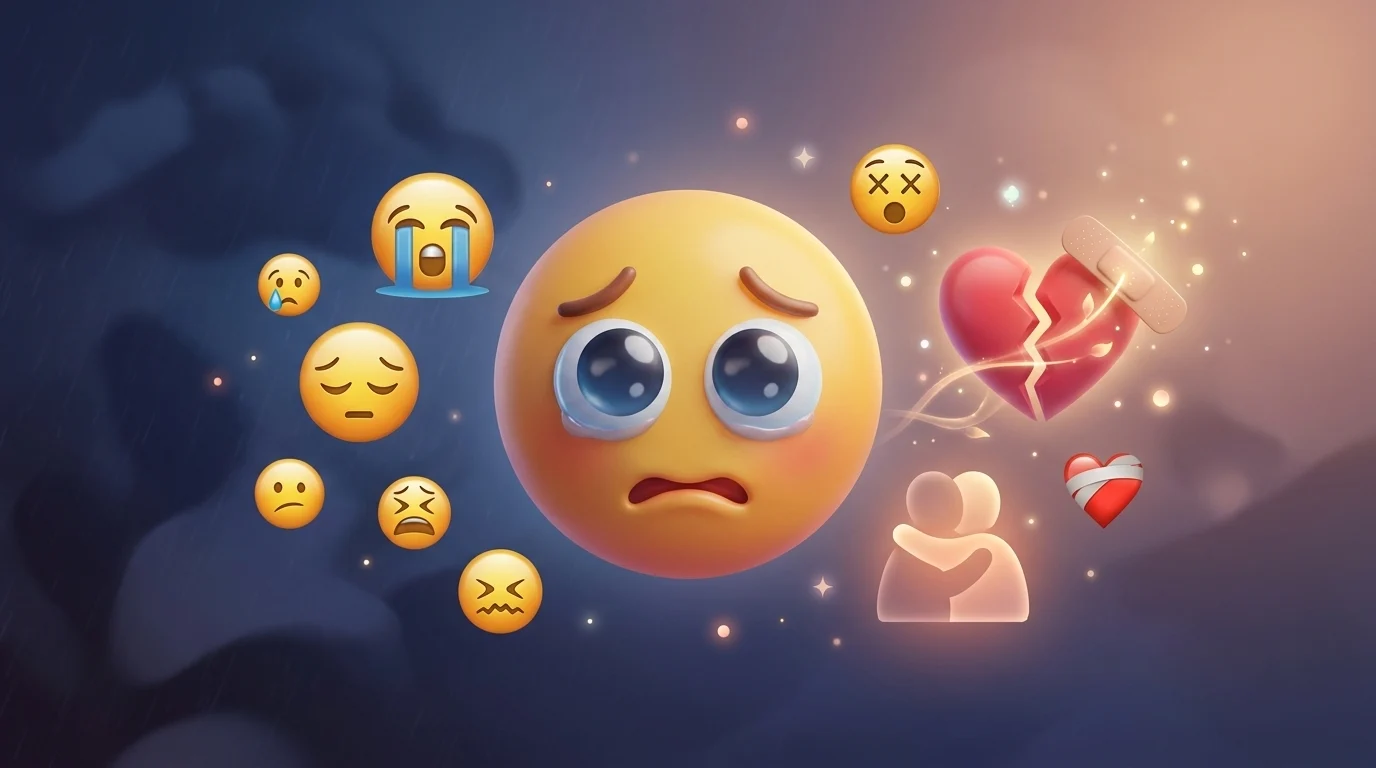
The trauma emoji is not one specific official emoji. Instead, people use different emojis to express emotional pain, shock, distress, sadness, difficult experiences, or feeling overwhelmed. Common choices include 🥺, 😭, 😢, 😔, 😣, 😖, 😵💫, 💔, and 🫂, depending on the emotion they want to communicate.
If you searched for a trauma emoji because you want to copy and paste an emoji for emotional pain, understand its meaning, find suitable combinations, or use one in a text or social media post, you have several options.
The right emoji depends on the situation. For example, 🥺 can express vulnerability or emotional hurt, while 😭 usually communicates intense sadness or crying. Meanwhile, 💔 focuses more directly on heartbreak or emotional pain.
This guide explains the common meanings, differences, copy-and-paste combinations, social media uses, and important considerations when using emojis to talk about difficult emotions.
Quick Answer: What Is the Trauma Emoji?
There is no single official emoji specifically named “trauma emoji.” People use different emojis to communicate the idea depending on the context.
Some common choices include:
- 🥺 — vulnerability, emotional hurt, pleading, sadness
- 😭 — intense crying or overwhelming sadness
- 😢 — sadness or emotional pain
- 😔 — disappointment, sadness, or a heavy mood
- 😣 — distress, frustration, or emotional discomfort
- 😖 — strong discomfort or distress
- 😵💫 — confusion, overwhelm, or feeling mentally shaken
- 💔 — heartbreak or emotional pain
- 🫂 — comfort, support, and emotional closeness
- 🩹 — healing or recovery from hurt
Because trauma can involve many different emotions, no single emoji can communicate every experience accurately.
What Does “Trauma Emoji” Mean?
When people search for a trauma emoji, they may be looking for an emoji that represents a painful or difficult emotional experience.
However, emoji meanings depend heavily on context. An emoji can suggest sadness, shock, distress, or vulnerability without communicating the full meaning of a person’s experience.
For example:
“That memory still hurts 🥺”
Here, 🥺 adds a vulnerable and emotional tone.
Another example is:
“I can’t believe that happened 😭”
The crying emoji emphasizes intense emotional reaction.
Similarly:
“That experience changed me 💔”
The broken heart focuses on emotional pain.
Therefore, choosing a trauma-related emoji works best when you consider the exact emotion you want to express.
Trauma Emoji Copy and Paste
If you want to copy and paste emojis commonly used to express emotional pain or distress, here are some options:
🥺 😭 😢 😔 😣 😖 😵💫 💔 🫂 🩹
You can copy them directly into:
- TikTok
- X
- Discord
- Text messages
- Comments
- Captions
- Online chats
You can also combine them to communicate a more specific emotional tone.
Simple Trauma-Related Emoji Combos
🥺💔 — emotional hurt
😭💔 — intense emotional pain
😔💔 — sadness and heartbreak
🥺🫂 — vulnerable and seeking comfort
😭🫂 — crying and needing support
😵💫🥺 — overwhelmed and emotional
🩹💔 — healing from emotional pain
😢🫂❤️ — sadness and comfort
🥺❤️🩹 — emotional hurt and healing
😭🩹❤️🩹 — difficult emotions and recovery
Which Emoji Is Best for Trauma?
There is no universally correct choice. Instead, choose an emoji according to the emotion you want your message to convey.
For example, 🥺 works well when you want to show vulnerability. 😭 communicates stronger crying or overwhelming sadness. If your message focuses on heartbreak, 💔 may fit better.
Here is a simple comparison:
| Emoji | Common Meaning | Emotional Tone |
|---|---|---|
| 🥺 | Vulnerability, sadness, pleading | Soft and emotional |
| 😭 | Intense crying | Very emotional |
| 😢 | Sadness | Gentle sadness |
| 😔 | Heavy mood, disappointment | Quiet and serious |
| 😣 | Distress or discomfort | Strained |
| 😖 | Strong discomfort | Intense distress |
| 😵💫 | Overwhelmed or confused | Disoriented |
| 💔 | Heartbreak or emotional pain | Direct and emotional |
| 🫂 | Comfort and support | Warm and caring |
| 🩹 | Healing or recovery | Hopeful and supportive |
This table shows why the phrase “trauma emoji” can refer to several different emojis rather than one exact symbol.
🥺 as a Trauma-Related Emoji
The 🥺 pleading face emoji often appears in emotional conversations because it can communicate vulnerability.
People may use it when they feel:
- Hurt
- Vulnerable
- Sad
- Emotionally overwhelmed
- Needing reassurance
- Sensitive about a situation
For example:
“I don’t want to talk about that right now 🥺.”
Or:
“That memory still makes me emotional 🥺.”
However, 🥺 does not specifically mean trauma. It can also appear in cute, affectionate, playful, or pleading messages.
Therefore, context matters.
😭 as an Emotional Pain Emoji
The 😭 loudly crying face often expresses intense sadness or crying.
People use it for serious emotions as well as exaggerated reactions.
For example:
“That was one of the hardest days of my life 😭.”
However, someone might also write:
“This movie made me cry 😭.”
Or even:
“I can’t stop laughing at this 😭.”
In online conversations, people sometimes use 😭 dramatically or humorously. Consequently, you should not automatically interpret it as evidence of serious emotional trauma.
💔 as a Trauma or Emotional Pain Symbol
The broken heart emoji 💔 communicates emotional pain more directly.
People often use it when discussing:
- Heartbreak
- Loss
- Disappointment
- Painful memories
- Difficult relationships
- Emotional struggles
Examples include:
“That experience really hurt me 💔.”
“Some memories are difficult to revisit 💔.”
The emoji can express strong emotional pain, but it does not specifically diagnose or define trauma.
🫂 as a Supportive Trauma Emoji
Sometimes, people do not want an emoji that represents pain. Instead, they want one that represents support.
That is where 🫂 can help.
The hugging emoji can communicate:
- Comfort
- Emotional support
- Care
- Sympathy
- Reassurance
- Being there for someone
For example:
“I’m here if you need someone to talk to 🫂.”
Or:
“You don’t have to go through this alone 🫂❤️.”
This makes 🫂 especially useful when responding to someone who shares something difficult.
🩹 and ❤️🩹 for Healing
People sometimes search for an emoji that represents healing after emotional pain.
The 🩹 adhesive bandage emoji can work metaphorically for recovery or repairing something that hurts.
The ❤️🩹 mending heart emoji more directly communicates emotional healing.
Examples:
“Taking things one day at a time ❤️🩹.”
“Healing takes time 🩹❤️🩹.”
“Learning to move forward ❤️🩹🌱.”
These emojis emphasize recovery rather than the painful experience itself.
Trauma Emoji Meaning in Texting
In texting, people use emotional emojis to add tone that plain words might not communicate.
Consider this message:
“I remember what happened.”
Without an emoji, the statement sounds neutral.
Now consider:
“I remember what happened 🥺.”
The emoji makes the message feel more vulnerable.
Similarly:
“I still think about it sometimes 💔.”
The broken heart emphasizes emotional pain.
However, emojis cannot communicate complex experiences on their own. If the subject is serious, clear words usually provide more useful context than a string of emojis.
Trauma Emoji Combos to Copy and Paste
Here are some ready-to-use combinations.
Emotional Pain
🥺💔
Deep Sadness
😭💔😢
Feeling Vulnerable
🥺🫂
Need for Comfort
😭🫂❤️
Difficult Memories
😔💭💔
Feeling Overwhelmed
😵💫🥺
Healing
💔🩹❤️🩹
Emotional Recovery
😔🌱❤️🩹
Support After a Difficult Moment
🫂❤️🩹✨
Moving Forward
💔➡️❤️🩹🌱
These combinations are flexible. You can adjust them according to the tone of your message.
Trauma Emoji for Social Media
People often use emotional emojis in captions, comments, and short posts.
For a reflective caption, you might write:
“Some chapters take longer to heal from ❤️🩹🌱.”
Or:
“Learning to be gentle with myself 🥺❤️🩹.”
TikTok
People often use emotional emojis in comments or captions:
“That part hit hard 😭💔.”
“I wasn’t ready for that ending 😭.”
For a more serious personal post:
“Some experiences stay with us for a long time. Taking things one day at a time ❤️🩹.”
Discord
In a private community or conversation, someone might use:
“That was a rough day 😔🫂.”
The important point is to match the emoji with the seriousness of the message.
How to Use Trauma-Related Emojis Respectfully
When you discuss painful experiences, avoid treating serious emotions as a joke unless everyone involved understands the context.
For example, sending 😭😂 after a funny story can be harmless. However, using laughing emojis when someone describes a genuinely painful experience can make them feel dismissed.
Instead, supportive combinations often work better:
- 🫂
- ❤️
- ❤️🩹
- 🤍
- 🌱
For example:
“I’m sorry you’re dealing with this 🫂❤️.”
A simple supportive message can communicate more care than a long collection of emojis.
Common Mistakes and Misunderstandings
Mistake 1: Thinking There Is One Official Trauma Emoji
There is no single universal emoji that means “trauma.”
Different people use different symbols depending on whether they want to communicate sadness, shock, emotional pain, vulnerability, or healing.
Mistake 2: Assuming 😭 Always Means Serious Distress
Online, people frequently use 😭 for exaggerated reactions.
Someone might write:
“This cake is so good 😭.”
They are probably expressing excitement or amusement rather than serious sadness.
Mistake 3: Using 💔 for Every Difficult Emotion
💔 works well for heartbreak and emotional pain, but it may not fit every situation.
If someone feels overwhelmed, 😵💫 might communicate the feeling better. If they need comfort, 🫂 may be more appropriate.
Mistake 4: Sending Only Emojis During a Serious Conversation
A person discussing a difficult experience may need words, attention, and support rather than just emojis.
Instead of sending:
“🥺💔😭”
you could say:
“I’m sorry you’re going through this. I’m here to listen.”
Then, if appropriate, add 🫂.
Mistake 5: Treating an Emoji as a Diagnosis
An emoji cannot tell you whether someone has experienced a particular mental health condition or traumatic event.
Always consider the person’s actual words and context.
Tips for Choosing the Right Trauma Emoji
Use these simple guidelines:
- Choose 🥺 for vulnerability or emotional sensitivity.
- Choose 😭 for intense crying or an overwhelming reaction.
- Choose 😢 for straightforward sadness.
- Choose 😔 for a quiet, heavy mood.
- Choose 😣 or 😖 for distress or discomfort.
- Choose 😵💫 for feeling overwhelmed or mentally confused.
- Choose 💔 for heartbreak or emotional pain.
- Choose 🫂 when you want to offer comfort.
- Choose 🩹 or ❤️🩹 for healing and recovery.
- Add words when the situation is serious or complicated.
Above all, use the emoji to support your message rather than replacing meaningful communication.
Trauma Emoji vs Sad Emoji
A common question is whether a trauma emoji differs from a sad emoji.
The main difference comes from context and intensity.
A sad emoji such as 😢 can simply represent disappointment or a bad day. A person might use it after missing a favorite meal or receiving disappointing news.
A trauma-related emoji combination, on the other hand, may appear in a conversation about a much more difficult experience.
Nevertheless, the emoji itself does not establish the seriousness of the situation.
For example:
😢 can mean ordinary sadness.
😢💔🫂 may suggest deeper emotional pain and a need for comfort.
The surrounding message provides the real meaning.
Why People Search for a Trauma Emoji
People often search for phrases like “trauma emoji,” “emotional pain emoji,” or “sad trauma emoji” because they want a quick visual way to express something difficult.
Sometimes they want to:
- Find an emoji for a social media caption
- Respond to an emotional message
- Express vulnerability
- Describe heartbreak
- Show that something affected them deeply
- Represent healing
- Find a copy-and-paste combination
Because emoji communication is highly flexible, people can combine several symbols to create a tone that a single emoji cannot provide.
Frequently Asked Questions About the Trauma Emoji
1. Is there an official trauma emoji?
No single official emoji specifically represents “trauma.” People use different emojis such as 🥺, 😭, 😔, 💔, 🫂, and ❤️🩹 depending on the emotion and context.
2. What is the best emoji for emotional pain?
💔 can clearly represent emotional pain or heartbreak, while 🥺 and 😭 can communicate vulnerability or intense sadness. The best choice depends on what you want to express.
3. What emoji means healing from trauma?
❤️🩹 and 🩹 can work as symbols of healing or recovery. You can also combine them with 🌱 or 🫂 to create a supportive message.
4. What does 🥺 mean in an emotional conversation?
🥺 commonly expresses vulnerability, sadness, pleading, or sensitivity. In an emotional conversation, it can suggest that someone feels hurt or emotionally exposed, but it does not specifically mean trauma.
5. Can I use 😭 as a trauma emoji?
Yes, you can use 😭 to communicate intense sadness or crying. However, people also use it humorously and dramatically online, so its exact meaning depends on the surrounding message.
6. What emoji can I send to comfort someone?
🫂 is a natural choice for expressing comfort and support. You can also use ❤️, 🤍, or ❤️🩹 depending on the tone of the conversation.
7. What is the difference between 💔 and ❤️🩹?
💔 generally represents heartbreak or emotional pain, while ❤️🩹 suggests healing, recovery, or a heart that is beginning to recover from hurt.
8. Can emojis accurately describe trauma?
Emojis can express emotions connected with difficult experiences, but they cannot fully describe or define trauma. Clear words and context provide much more information.
Conclusion
The trauma emoji is not one specific official emoji. Instead, people use different symbols such as 🥺, 😭, 😔, 💔, 🫂, 🩹, and ❤️🩹 to express emotional pain, vulnerability, distress, comfort, or healing. Your choice should depend on the specific feeling you want to communicate and the context of the conversation.
For everyday texting and social media, combining emojis can make your meaning clearer. However, serious emotional conversations require more than symbols. Use supportive words when appropriate, choose emojis carefully, and remember that an emoji can add emotional tone but cannot explain a person’s full experience.

I am Eddie Thomas, a passionate writer dedicated to helping readers discover clear, accurate, and useful synonyms. I enjoy exploring language, expanding vocabulary, and making word choices easier for everyone.