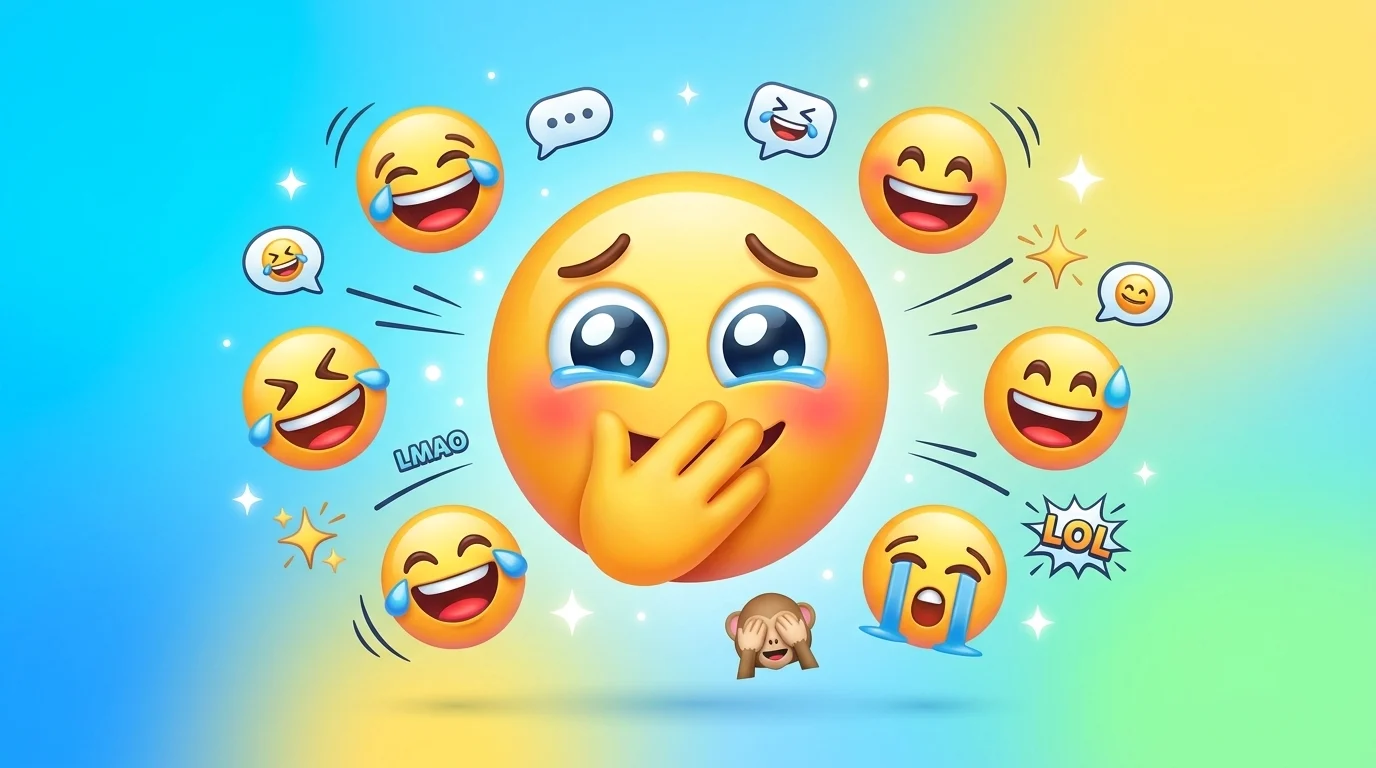
Have you ever seen something so funny that you tried to keep a straight face but could not? The trying not to laugh emoji is often used to express exactly that feeling. Depending on the conversation, people may use 😂, 🤭, 😭, or even 😆 to show that they are struggling to hold back laughter.
However, there is no single official emoji named “trying not to laugh emoji.” Instead, people choose different emojis to show a suppressed laugh, an uncontrollable reaction, or the feeling of finding something funny while trying to stay quiet.
In this guide, you will learn what the trying not to laugh emoji means, which emojis work best for this expression, how to copy and paste them, and how to use them naturally in texts, comments, chats, and social media posts.
Quick Answer: What Is the Trying Not to Laugh Emoji?
The trying not to laugh emoji usually refers to an emoji that shows you are struggling to hide your laughter.
Common choices include:
- 😂 Face with Tears of Joy
- 🤭 Face with Hand Over Mouth
- 😭 Loudly Crying Face, used jokingly for extreme laughter
- 😆 Grinning Squinting Face
- 🤣 Rolling on the Floor Laughing
- 😅 Grinning Face with Sweat
For a simple “I am trying not to laugh” reaction, 🤭 is often the closest match because the hand-over-mouth expression naturally suggests hiding a laugh or reaction.
Meanwhile, 😂 usually communicates that you are already laughing hard rather than trying to hold it in.
Is There an Official Trying Not to Laugh Emoji?
No. Unicode does not have one official emoji specifically named Trying Not to Laugh Emoji.
Instead, people use existing facial emojis to communicate the idea. The best choice depends on what you want to say.
For example, 🤭 can suggest that you are covering your mouth because you are trying not to laugh. 😅 can suggest an awkward laugh or a nervous attempt to stay composed. 😂 shows that the joke has already made you laugh.
Therefore, the phrase “trying not to laugh emoji” describes a common online expression rather than the official name of one particular emoji.
🤭 Trying Not to Laugh Emoji Meaning
The 🤭 Face with Hand Over Mouth is one of the closest emojis to the idea of trying not to laugh.
The hand over the mouth creates the impression that someone is:
- Trying to hide a laugh
- Covering their reaction
- Suppressing a giggle
- Feeling amused
- Trying to stay quiet
- Reacting to something unexpectedly funny
- Hiding an embarrassing reaction
For example:
“I promised I wouldn’t laugh during the meeting 🤭”
Here, 🤭 suggests that the person is struggling to control their laughter.
You can also use it after someone makes a funny comment:
“You really said that out loud? 🤭”
In this case, the emoji adds a playful and slightly mischievous tone.
😂 Face With Tears of Joy
The 😂 emoji is one of the most popular choices when people want to show laughter.
It officially represents a face laughing so hard that tears appear. Therefore, it works especially well when you have moved beyond “trying not to laugh” and are actually laughing.
For example:
“I was trying not to laugh, but then you sent that 😂”
The sentence makes the meaning especially clear because the text explains the attempt to stay serious while the emoji shows the final reaction.
You can also use:
“I can’t believe you actually did that 😂”
This usually means the situation is genuinely funny.
😅 Grinning Face With Sweat
The 😅 emoji can communicate a different kind of restrained laughter.
It often represents:
- Nervous laughter
- Awkward laughter
- Relief
- Embarrassment
- Trying to stay calm
- Laughing at an uncomfortable situation
For example:
“Everyone looked at me when I started laughing 😅”
Here, the emoji can show embarrassment mixed with amusement.
Likewise:
“That was definitely not supposed to happen 😅”
This gives the message an awkward but lighthearted feeling.
😭 Can Mean “I’m Laughing So Hard”
At first, 😭 might seem unrelated to laughter because it officially represents intense crying. However, internet users often use it differently.
In casual online conversations, people frequently use 😭 to express:
- Extreme laughter
- Being overwhelmed
- Emotional reactions
- Something being unbelievably funny
- “I can’t handle this”
For example:
“Why did he say that 😭”
Depending on the conversation, this may mean “That is so funny that I cannot handle it.”
Still, context matters. If you want your meaning to remain clear, use 😂, 🤣, or 🤭 instead.
🤣 Rolling on the Floor Laughing
The 🤣 emoji represents extremely strong laughter.
It works when something is much funnier than an ordinary joke.
For example:
“That video gets me every time 🤣”
However, it does not usually mean “trying not to laugh.” Instead, it communicates that you have completely lost control and are laughing hard.
Therefore, 🤣 works better as a follow-up to 🤭.
For example:
“I’m trying so hard not to laugh 🤭🤣”
This combination clearly shows the progression from suppressing laughter to giving up.
😆 Grinning Squinting Face
The 😆 emoji shows a strong, cheerful laugh with tightly closed eyes.
It can work well when you want to express genuine amusement without the dramatic feeling of 😂 or 🤣.
For example:
“That was actually hilarious 😆”
It can also appear in playful conversations:
“You really thought I wouldn’t notice? 😆”
Because the expression looks energetic and cheerful, it works particularly well for friendly jokes.
Trying Not to Laugh Emoji Copy and Paste
If you want to copy and paste a trying-not-to-laugh reaction, you can use these:
Closest match:
🤭
Other useful options:
😂
😅
😆
🤣
😭
😏
🙊
You can copy any of them directly into a text message, social media comment, caption, or chat.
For example:
Trying not to laugh: 🤭
Laughing hard: 😂
Extreme laughter: 🤣
Awkward laugh: 😅
Playful laugh: 😆
Internet-style extreme reaction: 😭
Trying Not to Laugh Emoji Combos
Emoji combinations can make the reaction more expressive.
Here are some useful combinations:
- 🤭😂
- 🤭🤣
- 🤭😭
- 😅🤭
- 😂😭
- 😆🤭
- 👀🤭
- 🤭💀
- 🤣😭
- 😭😂
- 🙊😂
- 😏🤭
Each combination can create a slightly different tone.
For example, 🤭😂 can mean “I was trying not to laugh, but I couldn’t.”
Meanwhile, 🤭😭 can create an exaggerated internet-style reaction to something extremely funny.
Trying Not to Laugh Emoji in Text Messages
In texting, context makes the emoji easier to understand.
Consider these examples:
Friend: “I accidentally called my teacher Mom.”
You: “I’m trying so hard not to laugh 🤭”
Or:
“Don’t make me laugh during this meeting 😂”
You can also use the emoji as a short response:
“🤭”
When the previous message is already funny, a single 🤭 can communicate everything you need.
However, remember that emojis can have different meanings between people. If your message could sound sarcastic, add enough words to make your intention clear.
Trying Not to Laugh Emoji on Social Media
Social media users often use laughing emojis as reactions to posts, comments, memes, and short videos.
For example:
“I came here for the comments 🤭”
Or:
“This is way too funny 😂”
You might also see:
“I’m supposed to be serious right now 😭”
On social platforms, exaggerated emoji combinations are common. Therefore, users may choose 😭 or 💀 even when they are not actually sad or discussing death.
The meaning usually comes from the surrounding conversation.
Trying Not to Laugh Emoji in Group Chats
Group chats create plenty of situations where you may want to show a hidden laugh.
For example:
“Everyone is being serious and I’m sitting here trying not to laugh 🤭”
You can also reply to a funny message with:
“STOP 😂”
Or:
“I can’t breathe 🤣”
These expressions usually add energy to casual conversations.
However, if the topic involves someone’s genuine embarrassment, loss, or difficult experience, avoid using laughing emojis unless you know the group understands the joke.
Trying Not to Laugh vs. Laughing Emoji
The difference becomes clearer when you compare the most common choices.
| Emoji | Common meaning | Best use |
|---|---|---|
| 🤭 | Hiding or suppressing a reaction | Trying not to laugh |
| 😂 | Laughing with tears | Something genuinely funny |
| 🤣 | Extremely strong laughter | Very funny situations |
| 😅 | Awkward or nervous laugh | Uncomfortable humor |
| 😆 | Cheerful laughter | Friendly jokes |
| 😭 | Exaggerated emotional reaction | Internet humor or extreme reactions |
| 🙊 | Hiding your mouth/reaction | Playful secrecy or suppressed reaction |
The important point is that no emoji always has only one meaning. Your words, relationship with the other person, and conversation topic all influence how people interpret it.
Common Mistakes When Using the Trying Not to Laugh Emoji
Using 😂 When You Mean “I’m Trying to Hide My Laugh”
😂 normally shows obvious laughter. Therefore, it may communicate the opposite of what you intend.
If you want to suggest that you are still holding back, 🤭 may fit better.
Using 😭 in a Serious Conversation
Although online users often use 😭 to mean “that is hilarious,” other people may interpret it as genuine sadness.
Therefore, avoid relying on 😭 when the conversation involves a sensitive topic.
Assuming 🤭 Always Means Laughter
🤭 can also suggest embarrassment, secrecy, shyness, or a mischievous reaction.
For example:
“I know something you don’t 🤭”
That message does not necessarily mean laughter. It may simply mean the person is hiding information playfully.
Using Too Many Emojis
A long string of emojis can make your message harder to understand.
Instead of:
🤭😂🤣😭💀😆🙊😂🤣
try:
“I’m trying not to laugh 🤭”
or:
“I can’t stop laughing 😂”
Simple messages often communicate the emotion more clearly.
How to Choose the Right Trying Not to Laugh Emoji
Think about what you actually want to communicate.
Use 🤭 when you want to show that you are hiding or suppressing your reaction.
Use 😂 when you are openly laughing.
Use 🤣 when something feels extremely funny.
Use 😅 when laughter has an awkward, nervous, or embarrassed quality.
Use 😆 for cheerful and playful laughter.
Use 😭 when the conversation already supports the exaggerated internet meaning.
As a result, choosing the right emoji becomes easier when you focus on the emotion rather than simply searching for an emoji with the exact phrase “trying not to laugh.”
Funny Trying Not to Laugh Examples
Here are some natural examples you can use:
- “I’m in class, stop 😂”
- “Trying so hard not to laugh 🤭”
- “You really sent that? 🤭”
- “I shouldn’t be laughing at this 😭”
- “This is getting harder to ignore 😂”
- “Everyone is serious and I’m fighting for my life 🤣”
- “I’m pretending to be normal right now 😅”
- “Don’t look at me, I’ll start laughing 🤭”
- “That comment finished me 😂”
- “I was holding it together until that last part 🤣”
These examples work because the words provide context while the emojis strengthen the emotional reaction.
Tips for Using the Trying Not to Laugh Emoji Naturally
First, consider the relationship you have with the person. A playful 🤭 can work well with friends, while a laughing emoji might look inappropriate in a formal conversation.
Next, consider the subject. If someone shares something genuinely painful, avoid using a laughter emoji simply because another part of the conversation seems funny.
Also, remember that different platforms and communities can develop their own emoji habits. For instance, some online communities use 😭 or 💀 as exaggerated laughter reactions.
Finally, let the conversation guide your choice. You do not need to find one perfect emoji every time. Choose the expression that best matches your intended tone.
Frequently Asked Questions
1. What is the trying not to laugh emoji?
There is no official emoji named “trying not to laugh emoji.” However, 🤭 is one of the closest choices because it can represent covering your mouth or hiding a reaction. 😂, 😅, and 😆 can also work depending on context.
2. What emoji means “trying not to laugh”?
The 🤭 emoji is commonly used for trying to hide a laugh or reaction. You can also combine it with 😂 or 🤣 to show that you eventually started laughing.
3. Can I use 😂 for trying not to laugh?
Yes, but 😂 usually means that you are already laughing. If you specifically want to show that you are holding back laughter, 🤭 may communicate that idea more clearly.
4. What does 🤭 mean in texting?
🤭 can mean hiding a laugh, embarrassment, shyness, secrecy, or a playful reaction. The exact meaning depends on the message and conversation.
5. What does 😭 mean when someone is laughing?
In online conversations, 😭 can express an exaggerated reaction to something funny. It can mean “this is so funny” or “I cannot handle this.” However, it can also represent genuine crying, so context matters.
6. What is the difference between 🤭 and 😂?
🤭 often suggests that you are covering or hiding your reaction, while 😂 clearly represents laughter. Therefore, 🤭 is generally closer to “trying not to laugh.”
7. Can I copy and paste the trying not to laugh emoji?
Yes. You can copy 🤭 and paste it into messages, comments, captions, chats, and other supported text fields. You can also copy 😂, 😅, 😆, or 🤣 for different types of laughter.
8. What are some good trying not to laugh emoji combinations?
Popular combinations include 🤭😂, 🤭🤣, 🤭😭, 😅🤭, and 👀🤭. Choose the combination that matches the level and style of your reaction.
Conclusion
The trying not to laugh emoji does not refer to one official Unicode emoji. Instead, people use several emojis to express the feeling of holding back laughter. Among them, 🤭 often comes closest because its hand-over-mouth expression suggests hiding a reaction. Meanwhile, 😂, 🤣, 😅, 😆, and 😭 can communicate different types of laughter depending on context.
Ultimately, the best emoji depends on what you want your message to feel like. Use 🤭 for a restrained or hidden laugh, 😂 for obvious laughter, 🤣 for extreme amusement, and 😅 for awkward laughter. When you combine the right emoji with clear words, your message becomes easier to understand, more expressive, and more natural.

I am Freddie James, the Administrator of SynonBox. I enjoy exploring language, improving vocabulary, and helping readers discover clear and useful synonyms for everyday writing. I aim to make word choices simple, accurate, and easy for everyone.