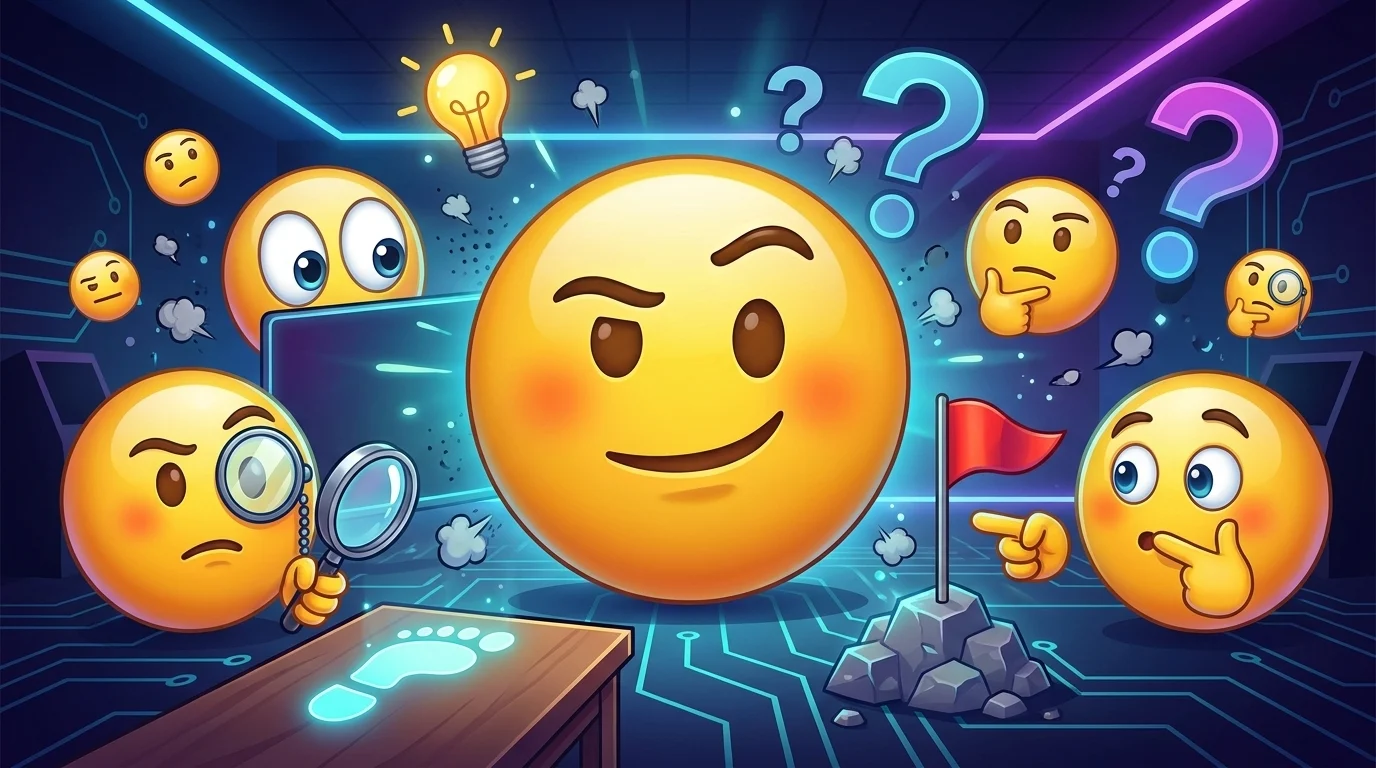
Looking for sus emojis to show that someone seems suspicious, questionable, or secretly hiding something? You can use several emojis to express that feeling, depending on how playful, funny, or direct you want to sound.
The word “sus” is short for “suspicious” or “suspicion.” People commonly use it in chats, gaming conversations, social media comments, memes, and especially situations involving jokes or playful accusations. Although no single official emoji means exactly “sus,” several emojis can communicate the idea very effectively.
The most popular choices include 🧐, 🤨, 👀, 🤔, 😏, and 🕵️. You can also combine them to create stronger expressions, such as 🤨👀, 🧐🔍, or 👀🤨.
This guide explains what sus emojis mean, which emojis work best, how to copy and paste them, and how to use them naturally in messages, gaming, TikTok, Instagram, and other social platforms.
Quick Answer: What Are Sus Emojis?
Sus emojis are emojis people use to communicate suspicion, doubt, curiosity, secrecy, or the feeling that something does not seem right.
There is no single official “sus emoji.” Instead, people choose different emojis based on the situation.
Popular sus emojis include:
- 🧐 — Face With Monocle
- 🤨 — Face With Raised Eyebrow
- 👀 — Eyes
- 🤔 — Thinking Face
- 😏 — Smirking Face
- 🕵️ — Detective
- 🔍 — Magnifying Glass
- 🤫 — Shushing Face
- 😶 — Face Without Mouth
- 🚩 — Triangular Flag
- ⚠️ — Warning
- 👁️ — Eye
For example:
🤨 = “That seems suspicious.”
👀 = “I’m watching.”
🧐🔍 = “Let me investigate.”
🤨👀 = “Hmm… something feels sus.”
🚩👀 = “That’s a red flag.”
The best choice depends on the exact feeling you want to express.
What Does “Sus” Mean?
“Sus” is an informal abbreviation of suspicious.
When someone calls something “sus,” they usually think it looks strange, questionable, dishonest, unexpected, or difficult to believe.
For example:
“You said you were sleeping, but you posted at 3 AM. Sus 👀”
Here, “sus” means the situation seems suspicious.
However, people often use the word jokingly. Someone might say:
“You ate the last slice of pizza? Sus 🤨”
That does not necessarily mean they seriously believe the person did something wrong. Instead, it adds playful suspicion to the conversation.
As a result, sus emojis often work best when you want to make the tone clear.
🧐 Face With Monocle as a Sus Emoji
The 🧐 emoji is one of the strongest choices for expressing suspicion or close examination.
Its monocle and serious expression make it look as though someone is carefully inspecting a situation.
You can use it when you want to say:
- “Interesting…”
- “Let me investigate.”
- “Something doesn’t seem right.”
- “I’m examining this.”
- “That’s suspicious.”
- “I don’t believe you.”
Examples:
“You finished all that food yourself? 🧐”
“Interesting story… 🧐”
“Something is not adding up 🧐🔍”
Because of its serious expression, 🧐 can also create a humorous detective-like tone.
🤨 Raised Eyebrow Emoji for Suspicion
The 🤨 emoji is probably one of the easiest emojis to use when you want to communicate doubt.
The raised eyebrow immediately suggests that you question what someone just said.
For example:
“You didn’t take my charger? 🤨”
“Really? 🤨”
“That’s your excuse? 🤨”
“Bro is acting sus 🤨”
The emoji works particularly well on its own because the facial expression already communicates skepticism.
Therefore, if you want a simple alternative to writing “sus,” 🤨 is an excellent choice.
👀 Eyes Emoji for “I’m Watching”
The 👀 emoji creates a slightly different type of suspicious feeling.
Instead of directly saying that something looks suspicious, it suggests that you are watching closely.
People commonly use it when:
- Someone says something interesting
- A secret appears to be developing
- Someone behaves strangely
- You notice drama
- You want more information
- You suspect something but do not want to say it directly
Examples:
“What’s going on here? 👀”
“I saw that 👀”
“You two are acting different today 👀”
“Something is happening 👀”
Because 👀 feels less aggressive than 🤨, it often works well in casual conversations.
🤔 Thinking Face as a Sus Emoji
The 🤔 emoji expresses thought, consideration, or uncertainty.
You can use it as a sus emoji when you want to suggest that you are questioning something.
For example:
“Wait… how did you know that? 🤔”
“That doesn’t make sense 🤔”
“I have some questions 🤔”
“Hmm, that’s suspicious 🤔”
Unlike 🤨, the thinking face sounds less like an accusation. Consequently, it works well when you want to remain playful or neutral.
😏 Smirking Face for a Different Kind of “Sus”
The 😏 emoji can also appear in suspicious conversations, but it has a different tone.
It often communicates:
- Confidence
- Mischief
- Teasing
- Self-satisfaction
- Suggestiveness
- Knowing something others do not
For example:
“I know what you did 😏”
“You think I didn’t notice? 😏”
“Interesting… very interesting 😏”
Because 😏 can carry a flirtatious or suggestive meaning, use it carefully. The surrounding words can significantly change how people interpret it.
🕵️ Detective Emoji for Investigation
If you want to make your “sus” message more obvious, use the 🕵️ detective emoji.
It works especially well with investigation-related combinations.
Examples:
🕵️🔍 — Investigating
🕵️👀 — Watching closely
🕵️🤨 — Suspicious investigation
🕵️🔍🧐 — Serious investigation
You can also use it jokingly:
“Who ate my snacks? 🕵️🔍”
“Time to investigate 🕵️♂️🔍”
This approach makes the conversation more playful instead of simply accusing someone.
Best Sus Emojis to Copy and Paste
Here are some easy options you can copy and paste:
🤨
🧐
👀
🤔
😏
🕵️
🔍
🤫
🚩
⚠️
You can also copy complete sus combinations:
🤨👀
🧐🔍
👀🤨
🕵️🔍
🤨🚩
👀⚠️
🧐👀
🤔🔍
😏👀
🕵️♂️🔍👀
These combinations let you communicate more than one idea at a time.
Popular Sus Emoji Combos
Emoji combinations can make your message much more expressive. Instead of using a single symbol, combine two or three emojis that support the same idea.
🤨👀 — “That Looks Suspicious”
This combination works when you notice something strange.
“You’re being quiet today 🤨👀”
🧐🔍 — “I’m Investigating”
Use this when you jokingly investigate a situation.
“Okay, let me check the evidence 🧐🔍”
👀🤨 — “I’m Watching You”
This combination feels playful and suspicious.
“Don’t think I didn’t notice 👀🤨”
🚩👀 — “Red Flag”
Use this when someone’s behavior seems questionable.
“He cancelled again without explaining 🚩👀”
🤨⚠️ — “Warning, Something Is Wrong”
This combination gives the message a stronger warning tone.
“That website looks strange 🤨⚠️”
🕵️🔍 — “Detective Mode”
Use this combination for jokes, gaming, or mystery-related conversations.
“Detective mode activated 🕵️🔍”
Sus Emojis for Among Us
The word “sus” became especially popular online through the game Among Us, where players discuss suspicious behavior while trying to identify an impostor.
Because of that connection, people often associate “sus” with:
- Impostors
- Crewmates
- Emergency meetings
- Accusations
- Hidden identities
- Strange behavior
- Detective jokes
You can create Among Us-style messages with emojis such as:
🔴👀🤨
🚨🧐
🕵️🔍
👀🚩
🤨🔴
For example:
“Red is looking sus 👀🤨”
The emojis do not officially represent the game itself. Instead, users combine familiar symbols to recreate the feeling of suspicion associated with the game.
Sus Emojis for TikTok
TikTok users often use short emoji combinations because they fit naturally into captions and comments.
Try these:
Bro is sus 🤨
Something is off 👀
Caught in 4K 👀📸
That’s suspicious 🧐
Nahhh 🤨💀
I’m watching 👀
Big red flag 🚩👀
You can also use the emojis without words.
For example:
👀👀👀
This can suggest that something interesting, unexpected, or suspicious just happened.
Sus Emojis for Instagram
On Instagram, sus emojis can work well in captions, comments, Stories, and direct messages.
For example:
“Not me noticing everything 👀”
“Hmm… interesting 🤨”
“I have questions 🧐”
“That’s a red flag 🚩”
“Something doesn’t add up 🤔”
You can also use a simple emoji reaction to a friend’s post.
For example:
👀
can mean “I’m watching,” “Tell me more,” or “I noticed that.”
Meanwhile:
🤨
can mean “Really?” or “I don’t believe you.”
Sus Emojis for Texting and WhatsApp
Sus emojis work particularly well in private chats because they allow you to communicate tone quickly.
Imagine your friend says:
“I definitely didn’t eat your cake.”
You could respond:
🤨
Or:
🧐🔍
Or:
👀
Each response creates a slightly different mood.
🤨 feels doubtful.
🧐🔍 feels investigative.
👀 feels watchful and playful.
Therefore, choose your emoji based on how strongly you want to express suspicion.
Sus Emojis for Gaming
Gaming conversations frequently use “sus” language because players need quick ways to react to strange behavior.
You can use:
🤨 — Suspicious player
👀 — Watching someone
🕵️🔍 — Investigating
🚩 — Red flag
⚠️ — Warning
🧐 — Examining evidence
Examples:
“Blue is sus 🤨”
“Watch green 👀”
“That’s a red flag 🚩”
“Let’s investigate 🕵️🔍”
These combinations work especially well in multiplayer chats and gaming communities.
Sus Emoji Meaning by Context
The same emoji can communicate different ideas depending on the conversation.
| Emoji | Common sus meaning | Typical tone |
|---|---|---|
| 🤨 | Doubt or suspicion | Skeptical |
| 🧐 | Close examination | Serious or humorous |
| 👀 | Watching or noticing | Curious |
| 🤔 | Questioning something | Thoughtful |
| 😏 | Mischief or knowing | Playful |
| 🕵️ | Investigation | Funny or detective-like |
| 🔍 | Searching for evidence | Investigative |
| 🚩 | Red flag | Warning |
| ⚠️ | Something may be wrong | Cautious |
| 🤫 | Keeping a secret | Secretive |
This table shows why there is no single perfect sus emoji. Different situations call for different expressions.
How to Choose the Right Sus Emoji
First, think about the message you want to send.
If you feel doubtful, choose 🤨.
When you want to investigate, choose 🧐🔍.
If you simply noticed something interesting, use 👀.
If you want to question someone’s explanation, use 🤔.
When you want a playful or mischievous tone, consider 😏.
If you want to warn someone, use 🚩 or ⚠️.
Most importantly, consider your relationship with the person. A joking emoji can sound like a serious accusation when the context does not make your intention clear.
Common Mistakes When Using Sus Emojis
Using 😏 in the Wrong Context
Because 😏 can sometimes sound flirtatious or suggestive, it may create confusion.
If you simply want to express doubt, 🤨 usually communicates your meaning more clearly.
Using Too Many Emojis
A message such as:
🤨👀🧐🔍🚩⚠️🤔🕵️
may look exaggerated.
Instead, choose two or three emojis that support your message.
Assuming Every Sus Emoji Means “Lying”
Suspicion does not always mean someone is lying.
For example, 👀 may simply mean “I’m interested.”
Similarly, 🤔 can mean someone is thinking rather than accusing another person.
Therefore, always consider the surrounding conversation.
Using Sus Emojis in Serious Conversations
“Sus” usually carries a casual or humorous tone. In a serious conversation, relying on emojis can sometimes make your message unclear.
In those situations, explain what you mean instead of expecting one emoji to communicate everything.
Tips for Using Sus Emojis Naturally
Keep the combination short. Two or three emojis usually work better than a long chain.
Match the emoji to your tone. Use 🤨 for doubt, 👀 for watching, and 🧐 for investigation.
Use words when necessary. For example, “That seems sus 🤨” leaves little room for confusion.
Consider your audience. Younger social media and gaming audiences may understand “sus” immediately, while some people may not.
Use context. The same emoji can mean different things in different conversations.
Avoid overusing them. A well-timed 👀 can communicate more than ten random emojis.
Frequently Asked Questions
1. What are sus emojis?
Sus emojis are emojis people use to express suspicion, doubt, curiosity, secrecy, or the feeling that something seems unusual. Common choices include 🤨, 🧐, 👀, 🤔, and 🕵️.
2. What is the best emoji for “sus”?
🤨 is one of the clearest choices because its raised eyebrow naturally communicates doubt or skepticism. However, 👀 and 🧐 also work well depending on the situation.
3. Is there an official sus emoji?
No single Unicode emoji is officially named or defined as the “sus emoji.” People use existing emojis creatively to communicate suspicion.
4. What does 🤨 mean in a sus context?
In a sus context, 🤨 usually means “I don’t believe you,” “That seems suspicious,” or “Are you sure?” The exact meaning depends on the surrounding message.
5. What does 👀 mean when someone says “sus”?
👀 often means “I’m watching,” “I noticed that,” or “Tell me more.” When paired with “sus,” it can emphasize that someone has noticed suspicious behavior.
6. What are some funny sus emoji combinations?
Some popular combinations include 🤨👀, 🧐🔍, 🕵️🔍, 🚩👀, and 🤔🤨. You can also add words, such as “That’s sus 🤨👀.”
7. Why is “sus” associated with Among Us?
The term became especially popular online through Among Us, where players accuse one another of suspicious behavior while trying to identify an impostor. The word then spread into everyday internet slang.
8. Can I use sus emojis on TikTok and Instagram?
Yes. Standard emojis such as 🤨, 👀, 🧐, 🤔, and 🕵️ can generally be used in captions, comments, messages, bios, and Stories on major social platforms. Their visual appearance can vary slightly between devices and platforms.
Conclusion
Sus emojis give you a quick and playful way to express suspicion, doubt, curiosity, or investigation. While there is no single official emoji that means “sus,” emojis such as 🤨, 🧐, 👀, 🤔, and 🕵️ can communicate the idea effectively. You can also combine them with symbols like 🔍, 🚩, and ⚠️ to create more specific meanings.
Ultimately, the best sus emoji depends on your situation and tone. Use 🤨 for doubt, 👀 when you are watching, 🧐🔍 when you are investigating, and 🚩 when something feels like a red flag. With the right combination, you can make your messages, gaming chats, captions, and comments more expressive without using many words.

I’m Jasmine Grace, a passionate writer who loves exploring synonyms and helping readers find clear, meaningful, and engaging words for everyday writing. I enjoy making language simple, useful, and interesting for everyone.